
Panic Attacks
From Fear to Trust and Reconnection
Depression free life!
Live stress free life!
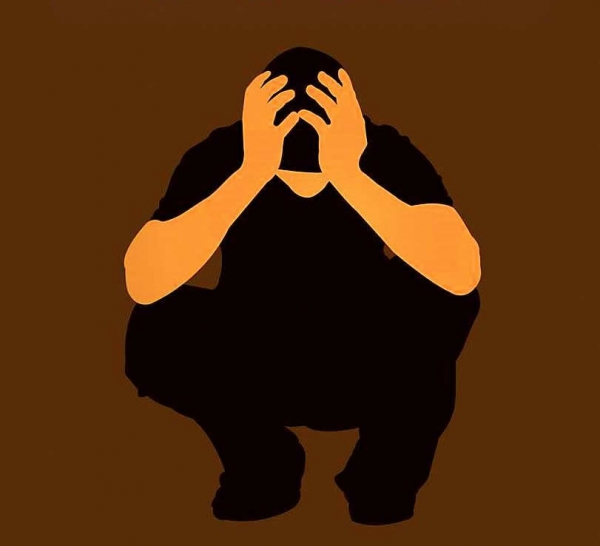
Panic Attacks: From Fear to Trust and Reconnection
A panic attack is a sudden episode of intense fear or distress that typically reaches its peak within a few minutes. It may be accompanied by rapid heartbeat, shortness of breath or a feeling of suffocation, sweating, trembling, dizziness, numbness, nausea, chest pain or pressure, a sense of unreality, or fear of losing control.
A characteristic feature is the overwhelming feeling that “something terrible is happening”: that the person is going to faint, lose control, “go crazy,” have a heart attack, or even die.
The experience is extremely intense and very real, even when there is no external danger corresponding to the alarm signals generated by the body.


The Body’s Alarm System and the Fear of Fear
At the core of panic lies the activation of an ancient survival mechanism. When the brain perceives a threat, the autonomic nervous system mobilizes the entire organism: the heart beats faster, breathing changes, the muscles prepare for action, and attention becomes focused on potential danger.
The classic responses are:
Fight – Flight – Freeze.
After an initial panic attack, however, a second mechanism may develop: the fear of fear itself.
A slight increase in heart rate, dizziness, or a change in breathing may be interpreted as the beginning of another attack. Fear increases physiological arousal, which in turn intensifies the fear:
physical sensation → fear → increased physiological arousal → greater fear.
Avoidance behaviours may gradually develop. The person may begin avoiding transportation, crowds, enclosed spaces, travelling, or situations associated with a previous panic attack.
Eventually, fear begins to restrict the very space of one’s life.
Behind the Symptom There Is a Person
Treatment certainly needs to relieve the symptom. But it does not necessarily have to stop there.
We can also ask a deeper question:
What is it within me that is in such a profound state of alarm?
Behind panic there may be accumulated stress, losses, traumatic experiences, fear or anger that could not be expressed, relationship difficulties, excessive demands placed upon oneself, or a way of living that has gradually moved away from one’s authentic needs.
This does not mean that every panic attack necessarily conceals a specific trauma. It means that beyond the symptom, we need to encounter the individual person—their personality, their history, and their unique way of relating to fear and to life.


Psychotherapy as an Individualised Therapeutic Process
Psychotherapy is one of the most important approaches to the treatment of panic attacks. One of its great strengths is its ability to adapt to the individual, rather than focusing solely on the diagnosis.
Cognitive Behavioural Therapy (CBT) offers particularly well-established tools for the treatment of panic. It helps the person recognise the vicious cycle between bodily sensations, catastrophic interpretations, and fear and, through appropriate techniques and gradual exposure, regain confidence in their body and everyday life.
Cognitive Analytic Therapy (CAT) offers a more integrative and individualised perspective. Combining cognitive and analytic elements, it explores not only the immediate symptom but also recurring patterns of thinking, feeling, and relating, as well as the ways in which these patterns have developed throughout the person’s life history.
In the same spirit of individualisation, an Enneagram-informed psychotherapeutic approach may also be used, drawing on the nine personality types of the Enneagram as a map for understanding personality. Rather than assuming that everyone who experiences panic has the same psychological structure, it explores the particular ways in which different personalities experience fear, seek security, use defensive mechanisms, relate to others, and respond to a perceived loss of control.
Psychotherapeutic work can therefore become more focused and individually tailored to the structure, patterns, and needs of the particular personality.
The Contribution of Body Psychotherapy
Body psychotherapy can also play an important role, precisely because panic is not experienced only as a thought. It is experienced powerfully through the body.
During an acute episode, grounding, bodily awareness, and appropriate self-regulation techniques can help reduce the escalation of the alarm response and gradually restore a sense of safety.
At a deeper level, body psychotherapy can support the development of greater coherence between cognition, emotion, body, and instinct.
The aim, therefore, is not simply to “think differently,” but to restore a deeper relationship of trust with the whole psychosomatic self.
Fight – Flight – Freeze and Fawn
Alongside the classic Fight – Flight – Freeze responses, contemporary trauma-informed psychotherapy also uses the term Fawn – Appeasement or Over-adaptation.
Here, the person attempts to secure safety by pleasing or appeasing others. They may find it difficult to say “no,” avoid conflict, give in, and repeatedly place other people’s needs above their own.
At a deeper level, there may be an underlying belief such as:
“In order for me to be safe, you need to be pleased with me.”
Such a mechanism may once have served a protective function. When it becomes a persistent way of living, however, it may maintain inner tension, difficulties with boundaries, and a gradual disconnection from the authentic self.
An Integrative and Holistic Therapeutic Approach
It is not always necessary to choose one therapeutic method exclusively.
Depending on the individual’s needs, an integrative and individualised therapeutic approach may draw on elements of Cognitive Behavioural or Cognitive Analytic Therapy, individual psychotherapy, Enneagram-informed psychotherapy, and body psychotherapy.
When clinically indicated, psychiatric medication may also be necessary, for as long as it is considered appropriate.
Within a holistic medical approach, homeopathy may also be used as a complementary method, with an emphasis on individualisation and on approaching the person as a psychosomatic whole. In the treatment of mental health conditions, it is particularly important that it is practised within a responsible framework and accompanied by appropriate medical and psychiatric assessment and monitoring.
Homeopathy should not replace necessary medical or psychiatric care. Any change, reduction, or discontinuation of psychiatric medication should be undertaken only by the treating psychiatrist or in direct consultation with them.
The therapeutic plan does not need to be identical for everyone, nor do all interventions need to be used simultaneously. Each therapeutic tool can be applied where it is needed and for as long as it is needed, according to the course and individual needs of the person.
Meditation and Holotropic Breathwork: Deepening Self-Awareness
Meditation, when appropriately practised, can help us observe thoughts, emotions, and bodily sensations without becoming completely identified with them.
Gradually, an inner space can emerge between:
“I am experiencing fear”
and
“I am my fear.”
On a more experiential level, Holotropic Breathwork, when practised within an appropriate and safe setting, following prior assessment and with suitably trained facilitators, can serve as a method of deeper self-exploration and exploration of emotional and traumatic material.
It is not a method for treating an acute panic attack. However, for appropriately selected individuals and under suitable conditions, it may provide an experiential space for deeper exploration, emotional processing, integration, and reconnection.
From Panic to Trust
A panic attack, therefore, is a symptom that needs to be addressed. At the same time, in some cases, it can also become an invitation to deeper self-awareness.
What am I truly afraid of? What am I constantly trying to control? What am I avoiding? Where do I find it difficult to establish boundaries? Where do I over-adapt in order to feel accepted? What within me needs greater safety, acceptance, and care?
The therapeutic journey can therefore move simultaneously in two directions: towards relief and safety in the here and now, and towards a deeper understanding and processing of the factors that sustain fear.
The goal is not to become a person who never experiences fear again.
It is to become a person who can experience fear without losing connection with oneself.
And then, the space once occupied by panic can gradually make room for greater trust, freedom, inner coherence, authenticity, and peace.