
Depression
From Loss of Meaning to Healing, Reconnection, and Transformation
Depression free life!
Live stress free life!
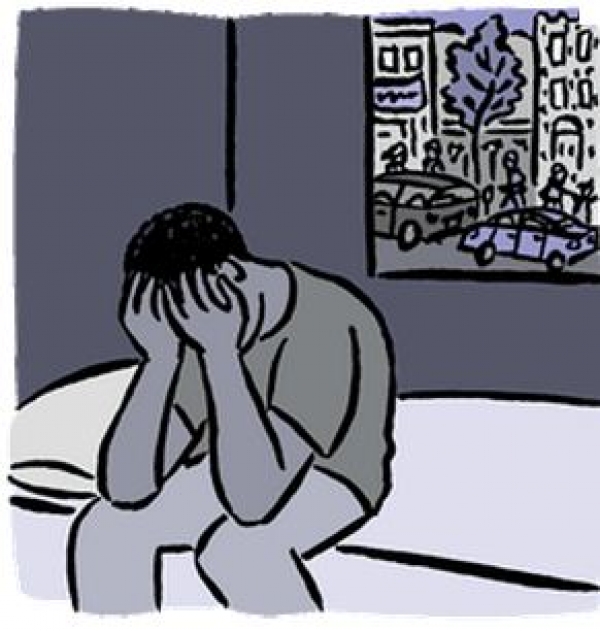
Depression: From Loss of Meaning to Healing, Reconnection, and Transformation
Depression is far more than a temporary low mood or a period of sadness. It is one of the most common mental health disorders of our time and has been described by many as one of the major “epidemics” of the modern world.
It may manifest as persistent sadness, loss of interest and pleasure, lack of energy and motivation, disturbances in sleep and appetite, difficulty concentrating, feelings of worthlessness or guilt, pessimism, and loss of hope. In more severe forms, suicidal thoughts and even psychotic symptoms may occur.
There is, however, another dimension that is worth exploring: not only “How can we eliminate the symptom?”, but also “What is happening within this particular person, and what might their psychological suffering be telling us?”
Depression requires treatment. Sometimes, however, when it is approached safely and responsibly, it can also become the starting point for a deeper process of self-awareness, reconnection, and a re-evaluation of one’s life.
When Depression Speaks Through the Body
Depression does not manifest only through thoughts and emotions.
It may appear as profound fatigue, weakness, sleep disturbance, changes in appetite, muscular pain, gastrointestinal complaints, a sense of heaviness, or a more general loss of vitality.
For some people, the physical dimension is so prominent that they initially seek an exclusively medical or organic explanation for what they are experiencing.
For this reason, appropriate assessment needs to include both psychiatric and medical evaluation, so that possible physical causes can be identified or excluded and the person can be approached as a psychosomatic whole.
Behind the Symptom There Is a Person
Diagnosis is essential. But a diagnosis is not the whole person.
Two people may meet exactly the same diagnostic criteria for depression, yet the inner pathways that brought them there may be completely different.
Behind depression there may be loss, chronic stress, unresolved trauma, suppressed anger or fear, unfulfilling relationships, excessive demands placed upon oneself, long-term neglect of personal needs, or a deeper loss of meaning and disconnection from the authentic self.
A person may have organised their life for years around “shoulds,” other people’s expectations, or a role that once protected them but no longer expresses who they truly are.
Sometimes depression may feel as though the organism itself is saying:
“I cannot continue living in the same way.”
This does not mean that depression should be idealised or regarded as something “good” or necessary. Its suffering can be immense, and the illness can become life-threatening.
It does mean, however, that once appropriate treatment and safety have been established, we can also explore the meaning that this particular crisis may hold in this particular person’s life.


Treating Depression: Safety Comes First
Depression requires treatment. And however important it may be to explore its deeper psychological, traumatic, or existential dimensions, protecting the person’s life and health must always come first.
The first principle is therefore simple:
First we safeguard life and safety. Then we can explore the meaning and deeper roots of the suffering.
Suicidal Thoughts Must Always Be Taken Seriously
One of the most serious symptoms of depression is suicidal ideation.
In severe depression, a person’s perception of themselves, their life, and their future may become profoundly altered. Hopelessness may create the conviction that nothing will ever change, that they are a burden to others, or that their suffering will never end.
In this sense, we may metaphorically say that sometimes “it is the illness speaking.”
Suicidal thoughts in the context of depression should not be romanticised or regarded simply as a philosophical or existential choice. They are a serious clinical symptom requiring immediate assessment, protection, and treatment.
When suicidal thoughts are present—and particularly when there is a specific plan, intent, a previous attempt, or significant deterioration—urgent psychiatric assessment is necessary and, depending on severity, close supervision or hospitalisation may be required.


Looking Out for One Another
Depression does not always appear suddenly. It may develop slowly and insidiously.
Precisely because the changes occur gradually, the person themselves may not realise how much they have changed.
Those around them, however, may notice that they are becoming withdrawn, no longer enjoying things they once valued, sleeping or eating differently, abandoning activities, neglecting themselves, or expressing profound hopelessness through statements such as “there is no point,” “I am a burden,” or “it would be better if I were not here.”
This is why it is so important to look out for one another.
Family members and loved ones cannot replace a psychiatrist or psychotherapist. They can, however, provide an invaluable safety net: recognising change, encouraging the person to seek help and, when there is a risk of self-harm, helping ensure that the person is not left alone with their despair.
Psychiatric Monitoring and Medication
Psychiatric assessment has a central role, particularly in moderate or severe depression, when there is significant impairment in functioning, suicidal ideation, psychotic symptoms, possible bipolar disorder, or a history of severe depressive episodes.
And medication, when it is necessary, is necessary.
It is not a matter of ideology. It is a matter of medicine.
For some people, appropriate antidepressant or other psychiatric medication can be a crucial component of treatment and, in some circumstances, of protecting life itself.
Particular vigilance is required when treatment is initiated or modified. In some patients, especially younger people, suicidal thoughts, agitation, or significant behavioural changes may emerge or intensify during the first weeks of treatment. Close and individualised monitoring is therefore particularly important during the initial phase.
There is also one important rule:
The initiation, dosage adjustment, replacement, gradual reduction, or discontinuation of psychiatric medication should be undertaken by the treating psychiatrist or in direct consultation with them.
Psychotherapy: Treating the Individual Person
Psychotherapy is a central pillar in the treatment of depression.
Its particular value lies in the fact that it does not treat only a diagnosis. It can provide a direct, deeply personal, and highly individualised therapeutic process, adapted to the personality, history, trauma, relationships, and actual needs of the particular person.
Cognitive Behavioural Therapy (CBT) provides important tools for identifying and modifying dysfunctional patterns of thought and behaviour.
Cognitive Analytic Therapy (CAT) broadens this perspective by exploring recurring patterns of thinking, feeling, and relating, as well as the ways in which these patterns have developed through the person’s life history.
Of particular interest within an individualised model of psychotherapy can also be an Enneagram-informed psychotherapeutic approach, which uses the nine personality types of the Enneagram as a map for self-observation and understanding.
Its purpose is not to restrict or “box” a person into a type. On the contrary, it can help identify the particular fears, needs, defences, desires, and recurring relationship patterns of the individual.
In this way, therapeutic intervention can become more individually tailored and focused on the particular structure and needs of the personality.
A Holistic Approach: Body, Psyche, and Individualisation
Depression does not concern only thought or mood. It affects the whole person: the body, emotions, vitality, instinct, motivation, relationships, and the very sense of meaning.
A holistic therapeutic approach therefore explores not only what a person thinks, but also what they feel, how they experience their body, how connected they are with their authentic needs, and where coherence between the different dimensions of their being may have been disrupted.
Body Psychotherapy
Body psychotherapy can make an important contribution in this direction. It is a broad therapeutic field with historical roots, among others, in the work of Wilhelm Reich and later Alexander Lowen and Bioenergetic Analysis, as well as in more recent body-oriented approaches.
A common starting point is the understanding that psychological life is not separate from the body. Defences, fear, anger, sadness, and traumatic experiences are expressed not only through thoughts but also through breathing, posture, muscular tension, movement, and the overall sense of vitality.
This dimension is particularly important in depression. A person often loses not only interest and pleasure but may also experience a more general decline in energy, motivation, and connection with the body and its needs.
Body-oriented psychotherapeutic work may support greater coherence between cognition, emotion, the body, and biological instinct, gradually strengthening functioning, vitality, and a sense of inner integration.
Homeopathy Within a Holistic Medical Approach
Within this broader holistic framework, homeopathy may also be incorporated as a complementary approach, with its own particular methodology and emphasis on individualisation.
The approach does not focus exclusively on an isolated symptom but attempts to view the person more comprehensively: their physical condition, vitality, sleep, emotional state, reactions, and the particular ways in which they experience their illness.
In my personal clinical experience, when appropriately incorporated into a broader therapeutic programme, homeopathy may be used as a complementary tool in an effort to support psychosomatic balance and functioning.
It does not, however, replace necessary psychiatric treatment and monitoring. Particularly in severe depression, suicidal ideation, psychotic symptoms, or significant impairment in functioning, safety and appropriate psychiatric care take priority.
The essence of a holistic approach does not lie in setting conventional medicine against other therapeutic approaches, but in their responsible integration and individualisation.
Not everyone needs the same interventions, nor do all therapeutic approaches need to be applied simultaneously. For one person, psychiatric stabilisation may need to come first; for another, psychotherapy may have a central role; and at a later stage, work with the body, trauma, relationships, or existential meaning may become increasingly important.
Each therapeutic tool should be used where it is needed and for as long as it is needed.
Meditation, Self-Observation, and a Different Way of Living
Meditation can be an important tool for self-observation and reconnection.
Through practice, a person may gradually learn to observe thoughts, emotions, and bodily sensations without becoming completely identified with them.
There is an important difference between:
“I am experiencing sadness”
and
“I am my sadness.”
A meditative way of living does not mean escaping from reality or denying pain. It means creating more inner space so that we can encounter pain without being completely overwhelmed by it.
In this sense, meditation can be connected not only with relief, but also with a deeper process of self-awareness, spiritual development, and the search for meaning and fulfilment.
Holotropic Breathwork and Deeper Experiential Exploration
On a different and more experiential level, Holotropic Breathwork may, for appropriately selected individuals and within a safe setting, serve as a method for deeper self-exploration and the exploration of emotional and traumatic material.
It should be undertaken following appropriate assessment and with suitably trained facilitators, and it is not a substitute for necessary psychiatric treatment.
Particularly in acute or severe psychiatric conditions, safety and stabilisation must precede any deeper experiential work.
When the appropriate conditions are present, however, it may create an experiential space in which the person has the opportunity to encounter deeper emotions and traumatic areas and move towards a process of processing, integration, and reconnection.
Sadness Is Not Depression
An essential distinction is needed here.
Sadness is a natural human emotion. It is not an illness.
The loss of a loved one, a relationship, an identity, a dream, or a period of life often needs to be grieved.
When sadness is given space to be experienced and expressed, it may complete its natural cycle. We do not always need to eliminate it quickly.
Sometimes it can even become a bridge towards transformation.
It may resemble the labour pains of giving birth to something new.
Something old has ended, while the new has not yet taken shape. The person finds themselves in an intermediate space of loss, uncertainty, and searching.
This can carry valuable psychotherapeutic and existential meaning.
But one point must remain absolutely clear:
The transformative potential of sadness should never be used to idealise clinical depression or minimise the risk of suicide.
First, we protect life.
Then, we treat the suffering.
And when the person is sufficiently safe, we can explore together whether something new is trying to emerge through that pain.
From Depression to Reconnection and Fulfilment
The treatment of depression, therefore, does not need to be limited to the elimination of a symptom.
It can become a process of reconnecting what has become disconnected:
the body with the mind,
emotion with consciousness,
instinct with everyday life,
the present self with the wounded areas of personal history,
the individual with other human beings,
and ultimately, the person with a deeper sense of meaning in life.
The therapeutic path may include psychiatric monitoring and medication when necessary, individualised psychotherapy, body psychotherapy, work with personality and trauma, physical activity, restoration of sleep and everyday routines, human relationships, meditation and, in appropriate cases, complementary holistic approaches.
There is no single path that is right for everyone.
There is the individual person and the path that this particular person needs.
And perhaps, gradually, the question itself begins to change.
From:
“How can I get rid of my depression?”
towards:
“How can I reconnect with life?”
With my body.
With my emotions.
With my authentic needs.
With the people I love.
With my creativity.
With meaning.
And ultimately, with that deeper human capacity not merely to survive, but to live with greater authenticity, connection, joy, inner freedom, fulfilment, and well-being.